
Stop Reviewing, Start Retrieving: The Exam Prep Shift That Actually Changes Scores
There is a particular kind of studying that feels extraordinarily satisfying and accomplishes almost nothing: reading over your notes, highlighting passages you've already highlighted, and finishing a session thinking, 'Yes, I definitely know this.' Cognitive scientists have a name for this phenomenon — the fluency illusion — and it is arguably the single greatest obstacle between students and the exam scores they're capable of earning. Familiarity masquerades as knowledge so convincingly that most students never question it, and most exam preparation advice never bothers to address it directly. Understanding why this illusion exists, and how to systematically dismantle it, is the actual work of preparing for an exam.
The core problem is that recognition and recall are fundamentally different cognitive processes, and exams almost exclusively test the latter. When you re-read a chapter, your brain recognizes the material — it has seen these words before, the ideas feel settled and accessible, and you register a comfortable sense of comprehension. But an exam doesn't show you the information and ask you to confirm it looks familiar; it presents a blank space and demands that you reconstruct the answer independently, under pressure, without any cues beyond the question itself. This is retrieval, and the only reliable way to build that capability is to practice it repeatedly and deliberately before you ever sit down in the exam room. Every hour spent passively reviewing is an hour not spent training the mental process you'll actually need.
The practical method that addresses this directly is called retrieval practice, and despite decades of robust research supporting it, it remains underused in secondary schools. The mechanics are straightforward: rather than consulting your notes, you close them, write down everything you can remember about a topic, and then — critically — open your notes and check your accuracy. The moments when you struggle to pull something forward, when you hesitate or misremember, are precisely the moments when durable learning is being built. Interleaving this process across multiple subjects in a single study session, rather than spending an entire afternoon on one topic, further compounds the benefit, because it forces your brain to locate and retrieve different kinds of knowledge in rapid, unpredictable succession — which is exactly what a real exam requires.
For parents watching a teenager prepare for high-stakes exams, the most useful reframe is this: effort that looks messy and difficult is usually more productive than effort that looks smooth and comfortable. A student sitting quietly with a highlighter may appear to be studying harder than one who is staring at a blank page, muttering, and occasionally looking frustrated — but the second student is, in all probability, learning more. If you want to support effective preparation at home, the most concrete thing you can do is encourage your student to explain material aloud to you without looking at their notes, ask them questions you find genuinely curious, and resist the impulse to intervene when they can't immediately retrieve an answer, because that struggle, uncomfortable as it is to witness, is the mechanism.
Spacing also matters enormously, and in ways that contradict how most students instinctively plan their time. Cramming the night before an exam does produce short-term retention — enough to answer questions the following morning — but the forgetting curve is steep, and material absorbed in a single concentrated session degrades rapidly within days. Distributing study sessions across several weeks, returning to the same material multiple times with gaps in between, produces retention that is meaningfully more durable and, crucially, more flexible — meaning students can apply concepts to novel question formats rather than only recognizing them in the exact phrasing they memorized. This is why a student who begins reviewing three weeks before an exam and studies for forty minutes four times a week will almost always outperform a student who spends six hours the night before, even though the total time investment may be comparable.
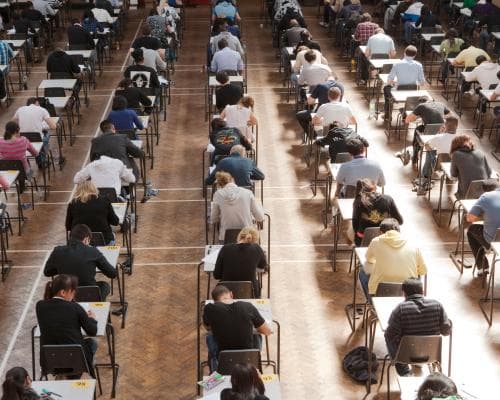
One underappreciated dimension of exam preparation that neither students nor parents tend to think about systematically is the value of practicing under conditions that approximate the exam itself — what researchers call context-dependent memory. The brain encodes memories alongside the environmental and physiological conditions present at the time of learning, which means that studying while lying on your bed listening to music creates a retrieval context that is quite different from sitting at a desk in silence under a time constraint. This doesn't mean every study session must be conducted in austere silence, but it does mean that at least some portion of your preparation — particularly in the final week — should involve sitting at a desk, working from memory, against a timer, without access to your phone. You are not just learning content; you are training your nervous system to perform under specific conditions.
The shift this all points toward is one of orientation rather than simply technique: preparation that is genuinely effective requires treating an exam not as a knowledge storage problem but as a performance problem — one that demands deliberate, uncomfortable practice in the actual skill being assessed. Students who internalize this early gain something more valuable than better scores on any single exam; they acquire a mental model for how learning actually works, one they can apply to coursework in university and professional development well beyond it. Close the notes. Write down what you know. Check your accuracy. Return to it in three days. That sequence, repeated with discipline and patience, is not glamorous — but it is, without meaningful qualification, what works.
For any student or parent looking to put these principles into immediate practice, the most useful first step is to take the notes from one upcoming exam and convert them into a set of questions — not multiple choice, but open-ended prompts that require a full, constructed response. Store those questions somewhere accessible, and answer a handful of them each day, always from memory and always before consulting the source material. Track what you get wrong not to feel discouraged but to identify precisely which ideas need more retrieval attempts, because the gaps you can locate and name are the gaps you have the power to close.

Why Your Notes Are Lying to You — And How to Fix Them Before the Exam
Most students leave class feeling confident because their notes look thorough — but thorough notes and useful notes are not the same thing. Here's how to tell the difference, and what to do about it before exam pressure exposes the gap.

Your Study Sessions Are Too Long — And That's Why You're Not Retaining Anything
Most students assume more study time means better results — but cognitive science tells a different story. The problem isn't how hard you're working; it's how you're structuring the work itself.

The Night Before the Exam Doesn't Matter As Much As You Think — But the Morning Does
Students and parents obsess over the night before a big test, but the hours between waking up and walking into the exam room may be the most strategically important window of all. Here's how to use them.